LinkedIn Video Strategy for Founders: What Actually Works
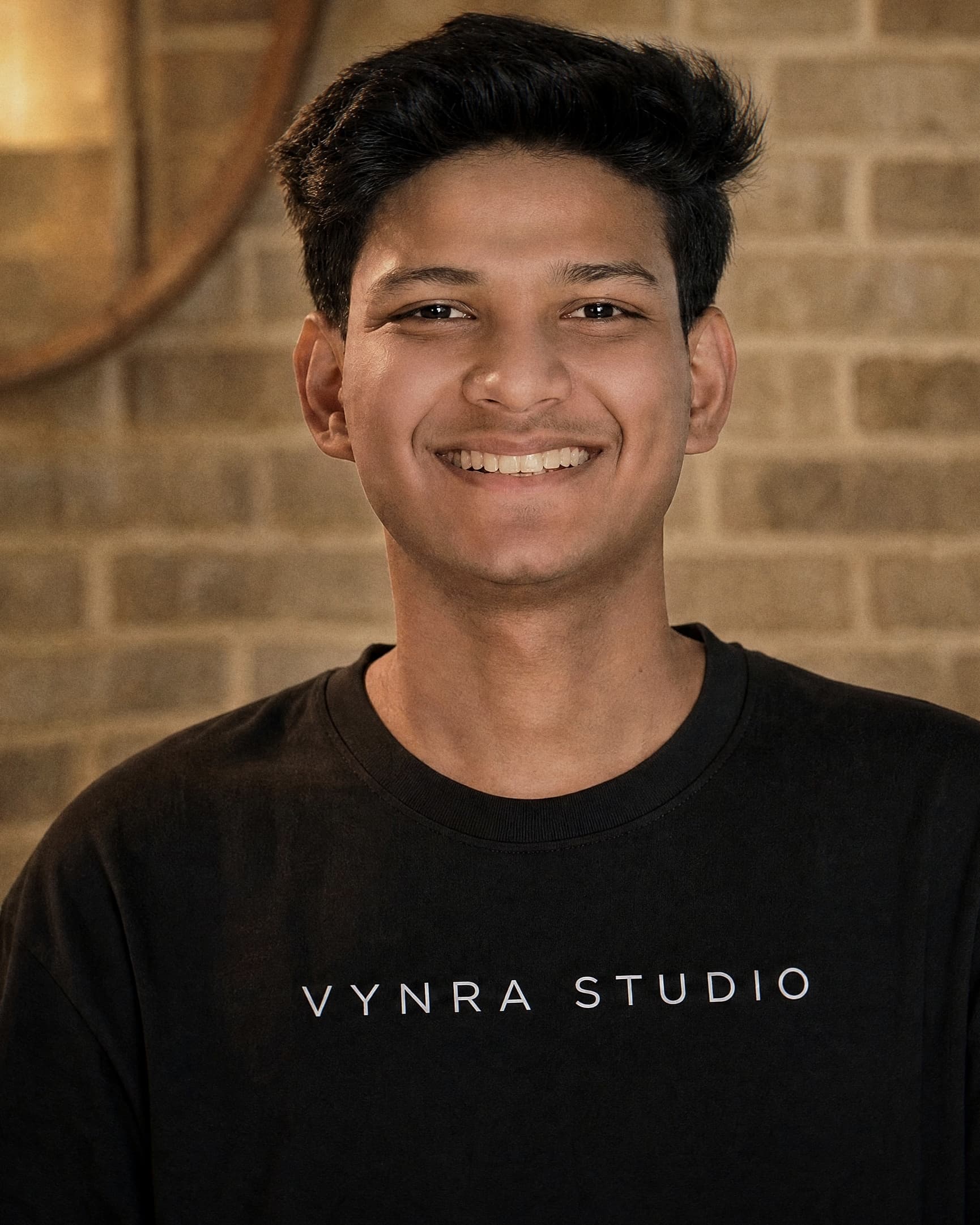 Pawan KumarFounder, Vynra Studio
There is a strange contradiction running through LinkedIn right now, and most founders have felt it before they could name it.
Video is performing better than ever on a per-view basis. Socialinsider's 2026 benchmark study, built on 1.3 million posts across 16,645 business pages, puts video engagement at 6.00% — up from 5.60% the year before. The people who watch are responding more.
And yet the same study found something uncomfortable: video views fell an average of 36% year over year, across every page size. More founders are posting video. Fewer people are seeing each one.
That is not a contradiction. It is saturation. When a format gets crowded, the feed stops handing out attention and starts rationing it. The videos that still travel are not the ones that showed up most often. They are the ones that earned the first three seconds.
This is a guide to earning them. Not growth hacks or posting schedules, but the specific decisions — what you say first, where you cut, what stays on screen — that separate founder video people finish from founder video people scroll past.
The numbers behind the shift
Before strategy, context. Here is how LinkedIn formats compare on engagement rate, from the same Socialinsider dataset covering January 2024 through December 2025:
| Format | 2024 | 2025 | Direction |
|---|---|---|---|
| Native document | 6.10% | 7.00% | Up |
| Multi-image | 6.60% | 6.45% | Down |
| Video | 5.60% | 6.00% | Up |
| Image | 4.85% | 5.30% | Up |
| Text | 4.00% | 4.50% | Up |
| Poll | 4.40% | 4.20% | Down |
| Link | 3.30% | 3.25% | Flat |
Two things are worth sitting with.
First, video is not the top-engaging format on LinkedIn. Native documents — carousels, slide decks, PDFs — still beat it. Any agency telling you video is the only thing that works on LinkedIn is selling you video. The honest version is that video does something the other formats cannot: it transfers conviction. A carousel can explain your pricing model. It cannot show a prospect what you are like to work with.
Second, the gap between engagement and reach is the whole story. Engagement rate is measured against the people who did see the post. That number is rising. The number of people seeing it is falling. Put simply: your video is more persuasive to a smaller room.
The strategic response is not to post more. It is to make each post survive the moment where most of them die.
Why most founder videos fail
We edit founder content every week, across SaaS, professional services, coaching and real estate. The failures repeat with remarkable consistency, and almost none of them are about production value.
They open like a presentation
The most common opening in founder video is throat-clearing. "Hi everyone, I'm Tom, founder of — and today I wanted to talk a little bit about something that's been on my mind."
Nine seconds. Zero information.
The feed does not owe you an introduction. Your name is directly above the video, attached to your face and title. Restating it spends the only budget you have. The strongest openings we cut start mid-thought, as though the viewer walked in on a conversation already worth having: "We raised our prices 40% and lost one client. Here's what I got wrong about that."
They were shot for the camera, not the feed
A founder video is watched on a phone, held one-handed, muted, in a queue between two other posts. Most are recorded as though they will be watched on a monitor with the volume up and full attention.
That mismatch produces predictable problems: subjects framed too wide to read on a small screen, key numbers spoken but never shown, and pacing calibrated for a room rather than a thumb.
There was no reason for it to be video
This is the one nobody wants to hear. Some ideas are text. If your post is a list of five tips with no story, no demonstration and no stake, a document post will outperform the video version and take a tenth of the effort — and the benchmark data supports that.
Video earns its cost when there is something a reader cannot get from text: your reasoning under pressure, a screen you can walk through, a reaction you cannot fake, a before and after they need to see to believe.
Video is not a format you owe the algorithm. It is the format you choose when conviction is the payload.
The three formats that consistently earn attention
Across client work, three shapes do most of the heavy lifting for founders. They are simple on purpose, because complexity is what kills consistency.
The POV take
Sixty to ninety seconds. One opinion, argued properly.
This is the highest-leverage founder format because it does the thing only you can do: it shows how you think. Not what you know — what you believe, and why. The structure is almost always the same: state the position, name the common counter-argument honestly, then explain what changed your mind.
The honesty about the counter-argument is not a rhetorical trick. It is the part that builds trust, because it proves you have actually considered the alternative.
The teardown
Two to four minutes. Your screen, your reasoning, out loud.
Walk through a real landing page, a real pipeline, a real onboarding flow — yours or, with permission, a client's. Narrate the decisions. This format converts unusually well for founders selling considered purchases, because it lets a prospect audit your judgment before they ever book a call.
A teardown does not need to be flattering. Tearing down your own earlier work is often stronger than praising someone else's.
The story with a number in it
Ninety seconds to three minutes. Something that happened, with a figure attached.
"We cut our onboarding from 21 days to 4." "Churn dropped two points when we stopped doing demos." The number is what makes it travel — it gives people something concrete to quote when they share it, and it signals that you are reporting rather than theorizing.
Vague stories do not spread. Specific ones get forwarded into Slack channels.
| Format | Length | Best for | Effort |
|---|---|---|---|
| POV take | 60–90s | Trust, positioning, reach | Low |
| Teardown | 2–4 min | Demonstrating judgment, inbound leads | Medium |
| Story with a number | 90s–3 min | Shares, credibility, proof | Medium |
The first three seconds
Everything above is content strategy. This is mechanics, and it is where editing earns its money.
LinkedIn video autoplays muted in the feed. That single fact should govern how the opening of every founder video is built. The viewer's first encounter with your idea is silent and visual, and you have roughly the length of a thumb-swipe to interrupt it.
Four things reliably buy that moment:
- Open on a face mid-sentence, not a title card. Motion in a human face stops scrolling more reliably than typography. Title cards are a habit inherited from YouTube, where the viewer already chose to click. On LinkedIn nobody chose you yet.
- Put the claim on screen as text within the first second. Not a topic label — the actual claim. "Discounting cost us more than churn" works. "Thoughts on pricing" does not.
- Cut the runway. The usable take almost never starts where the recording starts. In our edits, the first three to eight seconds of founder footage are removed more often than not.
- Frame tighter than feels natural. A medium-close crop reads on a phone. A wide shot of a founder at a desk does not.
Subtitles are design, not accessibility theater
Captions are not optional on a muted feed, but most are treated as a compliance step — auto-generated, tiny, grey, dropped at the bottom of the frame where the interface overlaps them.
Treated properly, subtitles are the primary visual layer of a LinkedIn video. Set them large. Position them in the upper-middle third, clear of platform chrome. Break lines on meaning rather than character count, so a phrase lands as a phrase. Emphasize the two or three words per video that carry the argument.
Then check the transcription. Auto-captions consistently mangle exactly what matters most: product names, people's names, and numbers.
Editing decisions that change retention
Once the opening holds, retention is a craft problem. These are the levers we pull most often on founder footage, in rough order of impact.
Remove the second explanation. Founders naturally explain a point, then explain it again in different words to be sure. In conversation this is generous. On video it is where people leave. Keep the clearer version, cut the other.
Hold one idea per video. The instinct to add a related second point is the most expensive habit in founder content. Two ideas in one video means neither is memorable and the runtime doubles. The second idea is next week's post — and you have just solved next week.
Cut on thought, not on pause. Removing every breath produces a video that feels anxious and slightly inhuman. Cutting at the end of complete thoughts keeps momentum while leaving the founder recognizably human. Pace is not the same as speed.
Show the number the moment it is spoken. If a figure is worth saying, it is worth putting on screen. Spoken numbers evaporate; displayed numbers get screenshotted.
Leave one pause. Counterintuitively, a single held beat before the most important sentence outperforms wall-to-wall tightness. Contrast is what makes emphasis legible.
End on the last useful word. Sign-offs, waves and "anyway, let me know what you think" are retention leaks at exactly the moment the platform is measuring completion. When the idea is finished, the video is finished.
Where the ideas actually come from
The question we get more than any other is not about lighting or length. It is "what do I even talk about?"
Founders assume this is a creativity problem. It is almost always a capture problem. You have four or five genuinely interesting thoughts a week and lose all of them because they arrive during a sales call, not during a recording session.
The fix is a running note and four prompts that reliably produce material:
- What did you change your mind about this quarter? Reversals are the most trusted thing a founder can publish, because nobody fakes them. They also make excellent POV takes.
- What question came up twice on sales calls this month? If two prospects asked it, several hundred people are wondering it. Objections you answer publicly stop being objections.
- What did you get wrong, and what did it cost? Specific, quantified mistakes travel further than any success story, and they cost you nothing competitively.
- What did you look at this week that most people never see? A pipeline, a churn cohort, a pricing spreadsheet, a rejected design. Access is content.
Keep the note in whatever you already have open. The discipline is writing the thought down within ten minutes of having it — not the format, not the app.
By the time a recording block arrives, the founders who sustain this show up with eight prompts and no anxiety. The ones who struggle sit down to a camera and try to be interesting on demand, which is a considerably harder job.
Building a system you can actually sustain
Most founder video dies of scheduling, not quality. The fix is to stop treating video as an act of inspiration and start treating it as a standing block.
The pattern that survives contact with a founder's calendar looks like this:
| Step | Who | Time | Output |
|---|---|---|---|
| Capture ideas as they occur | Founder | Ongoing | Running note of 8–10 prompts |
| Batch record | Founder | 60–75 min, biweekly | 6–8 raw takes |
| Edit, caption, package | Editor | 2–3 days | 6–8 finished videos |
| Publish and respond | Founder | 15 min per post | Live posts, comments answered |
Two details make or break it.
Record in batches. The setup cost of video — lighting, framing, getting past the first stiff take — is almost entirely fixed. Paying it once for eight videos instead of eight times is the difference between a system and a resolution.
And protect the comment window. A founder who posts and disappears gets a fraction of the distribution of one who answers replies for the first hour. This is the cheapest lever in the entire process and the one most often skipped.
One recording, a month of posts
The batch above produces more than it appears to. A single 60-minute recording session, edited properly, routinely yields:
- Six to eight standalone LinkedIn videos
- A long-form cut for YouTube, if the session had a spine
- Fifteen to twenty short vertical clips for other platforms
- Several text posts, written from the transcript's strongest passages
- A newsletter section or two
This is why we treat repurposing as an editing discipline rather than a distribution afterthought. The selection question — which sixty seconds of an hour deserve to become a post — is the same judgment that makes the original edit good. We wrote about how that selection system works in From 60-Minute Podcast to 30 Viral Clips, and the mechanics transfer directly to founder recordings.
Measuring the right things
LinkedIn's native analytics reward the wrong instincts if you read them casually. Impressions feel like the score. They are the least useful number on the page.
| What to watch | What it tells you | What to change if it is weak |
|---|---|---|
| Completion rate | Whether the video earned its runtime | Cut length; remove the second explanation |
| Retention at 3s | Whether the opening works | Rewrite the first line; tighten the crop |
| Comments per impression | Whether the idea provoked thought | Take a clearer position |
| Profile views after posting | Whether it drove curiosity about you | Sharpen the claim; add specificity |
| Inbound conversations | Whether it is doing business | Move from tips toward judgment and proof |
Impressions measure how the feed felt about you. Completion and inbound measure how people felt about you. Only one of those pays.
If retention is the part you want to go deeper on, the underlying mechanics are the same across every platform — we covered them in The Psychology Behind High-Retention Video Editing.
When to bring in an editor
Not every founder needs one immediately. The honest test is time, not quality.
Editing a single 90-second founder video properly — cutting the runway, tightening the middle, setting captions with real typographic care, checking every number on screen — takes a competent editor between 90 minutes and three hours. If you are doing that yourself for six videos a month, that is a working day and a half taken from running your company.
The threshold most founders hit is not "my edits look bad." It is "I stopped posting because editing was the bottleneck." Consistency is what compounds on LinkedIn, and consistency is usually the first thing self-editing costs you.
What to ask before you hire
- Ask for founder work specifically. Editing a talking head for LinkedIn has almost nothing in common with editing a wedding film or a music video. Ask to see founder content, and ask what the retention looked like.
- Ask who chooses the cuts. If the editor only executes a shot list, you have hired an operator. If they decide what to remove and can defend it, you have hired judgment.
- Ask about turnaround under load. Anyone can deliver one video quickly. Ask what happens in a week where you send eight.
- Ask how captions are handled. The answer tells you immediately whether they understand the muted feed or treat subtitles as a checkbox.
- Ask for the second revision policy in writing. Unlimited revisions usually means slow first drafts. A defined round or two usually means the first cut is meant to be close.
Frequently asked questions
How long should a LinkedIn video be?
Long enough to make one point properly, which in practice means 60 to 90 seconds for an opinion and two to four minutes for a walkthrough. Length is not the variable that matters; density is. A tight three-minute teardown will out-retain a padded 45-second clip. Cut everything that is not doing work, then stop.
Should I post video natively or link to YouTube?
Post natively, every time. LinkedIn's engagement data is unambiguous on this point — link posts sit at the bottom of every format table, at roughly 3.25% against video's 6.00%. A post that sends people off-platform competes against the platform's own interest in keeping them there. If you want the YouTube view too, publish the native cut on LinkedIn and put the long-form link in the comments or in a follow-up post.
Is my phone good enough, or do I need a proper setup?
A recent phone shoots more than enough resolution. The three things that actually separate amateur from professional on a muted mobile feed are framing, audio and captions — in that order of cheapness to fix. Put the phone at eye level, sit near a window with the light in front of you rather than behind, and use any lavalier microphone. That combination outperforms an expensive camera used badly.
How often should a founder post video?
Weekly is the point where compounding starts, and it is achievable from a single biweekly recording block. Twice a week is better if the ideas are genuinely there. Daily is almost always a mistake for founders — it forces quantity over judgment, and judgment is the entire reason anyone follows a founder rather than a brand page.
Why did my video get fewer views than my text posts?
Most likely because the first three seconds did not hold, and possibly because the feed is simply distributing video to fewer people than it did a year ago — views fell 36% year over year in the Socialinsider data. Check your three-second retention before rewriting your strategy. If people are leaving in the first moments, the problem is the opening, not the topic.
Do hashtags still matter for LinkedIn video?
Far less than they did, and never enough to rescue a weak opening. Two or three genuinely relevant tags are fine. Stacking ten is a visible signal of trying too hard, and it costs you the space where a real first line could have been.
Does the founder have to be on camera?
For building a personal brand, yes — the face is the asset, and screen-only content transfers far less trust. But screen recordings with founder voiceover work well for teardowns and product walkthroughs, and they are a reasonable place to start for founders who find the camera difficult. Many of the founders we work with began with voiceover teardowns and moved to camera once posting became routine.
Summary
- Video engagement on LinkedIn is rising (6.00% in 2025, per Socialinsider) while views per post fell 36% year over year. The feed is rationing attention, not withdrawing it.
- Native documents still out-engage video. Choose video when conviction, demonstration or proof is the payload — not out of obligation.
- Three formats carry most founder results: the POV take, the teardown, and the story with a number in it.
- LinkedIn autoplays muted. Open on a face mid-sentence, put the claim on screen in the first second, cut the runway, and frame tight.
- Treat subtitles as the primary visual layer, not an accessibility checkbox.
- Hold one idea per video, cut on thought rather than on pause, and end on the last useful word.
- Batch record, edit in a block, and protect the first hour of comments.
- Judge performance on completion, three-second retention and inbound conversations. Impressions flatter and mislead.
Working with Vynra Studio
We are a video editing studio for founders, creators and brands who treat content as a system rather than a series of one-offs.
Most of our work sits in exactly the territory this article covers: founder content and personal brand editing, LinkedIn videos, YouTube and podcast editing, short-form content, and repurposing one recording into a month of posts. Clients come to us when the ideas are there and the editing has become the constraint.
If you want to see how we think before you talk to us, the Studio Profile covers our process, and our selected work shows the output. When you are ready, book a strategy call and we will look at your last few videos and tell you honestly what we would change — whether or not you work with us.
Need help with your content?
Vynra edits short-form, long-form and podcasts for creators and brands. Start a project, or see how the studio works first.